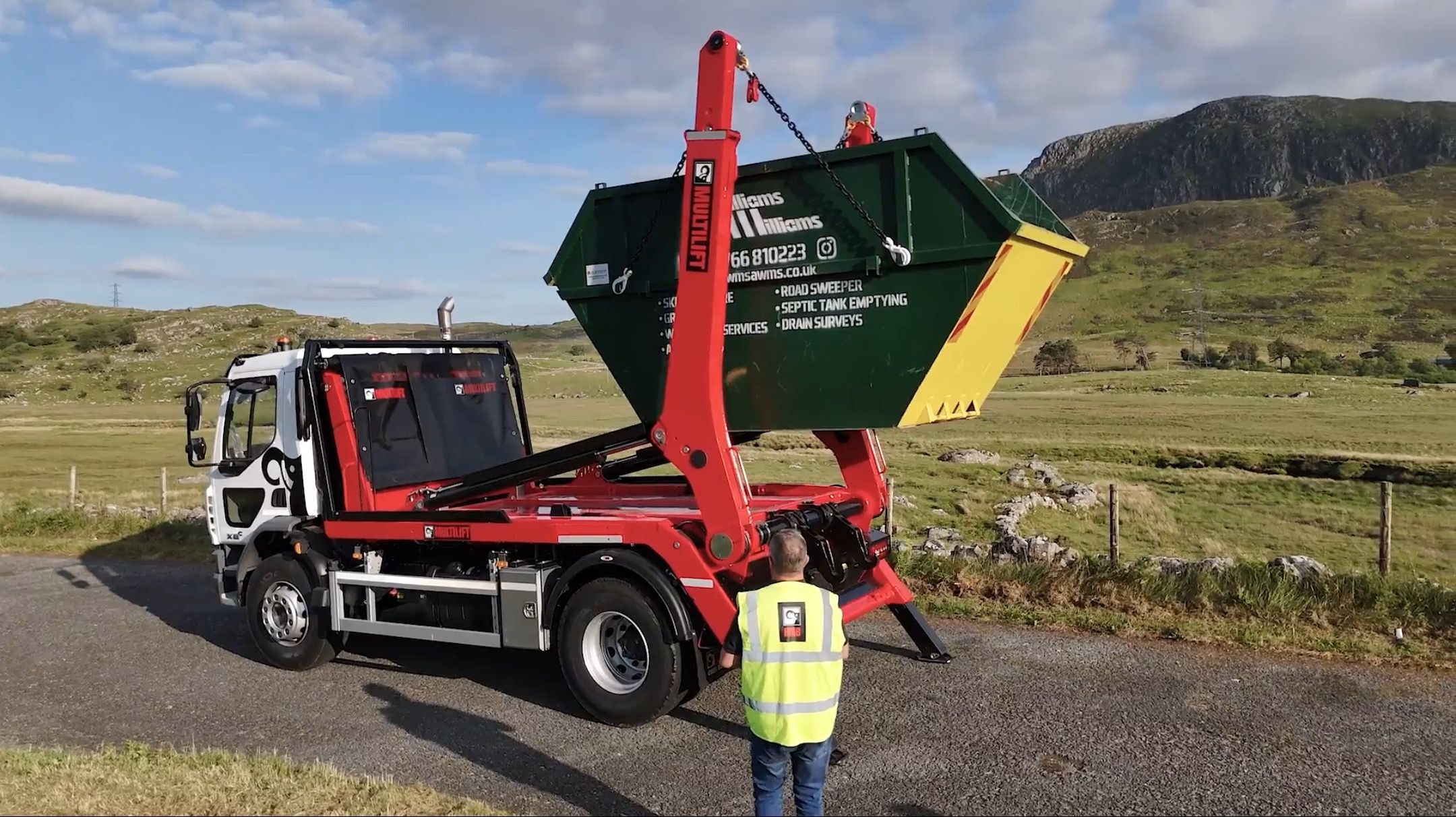
A skip lorry, also known as a skip loader, is a specialised commercial vehicle engineered for the precise task of delivering, collecting, and transporting waste skips. It integrates a powerful hydraulic lifting mechanism onto a rigid truck chassis, forming a purpose-built solution for waste management, construction, and recycling industries across the UK.
In any operation where bulk waste or materials need to be moved efficiently, the skip lorry is an indispensable tool. From clearing rubble on a busy construction site to managing household waste for a skip hire firm, its role is fundamental. The vehicle's design allows a single operator to handle heavy, awkward containers safely and quickly, making it the backbone of the UK's waste logistics network.
While often seen on British roads, not all skip lorries are created equal. The specific combination of the chassis, lifting gear, and control systems defines its capability, payload, and suitability for different tasks. Understanding these core components is the first step in appreciating how this powerful vehicle keeps our industries moving.
Understanding the Skip Lorry: More Than Just a Truck
The Definition: A Purpose-Built Waste Management Vehicle
A skip lorry, often referred to as a skip loader, is far more than a standard truck. It's a highly integrated piece of equipment, where a robust chassis is paired with a powerful hydraulic lifting system. Its sole purpose is to handle the demanding cycle of delivering empty skips and retrieving full ones with maximum efficiency and safety. This purpose-built design is what makes it a cornerstone of UK waste logistics.
The Role of the Skip Lorry in UK Industries
The presence of a reliable skip lorry is critical across several key sectors. Its versatility makes it an essential asset for businesses that generate or manage bulk materials.
- Construction: On any site, from a small renovation to a major demolition, a skip lorry is vital for clearing waste materials like rubble, soil, and timber, keeping the site clear and productive.
- Waste Management: For commercial and domestic skip hire companies, the skip lorry is the primary operational tool. Its performance directly impacts route efficiency, customer service, and overall profitability.
- Recycling: These vehicles are fundamental in the circular economy, transporting segregated materials such as scrap metal, green waste, or hardcore from collection points to processing facilities.
Skip Lorry vs. Hooklift: What's the Key Difference?
While they perform similar roles, the distinction is in the mechanism and application. A skip lorry uses chains connected to lifting arms to hoist standard builder's skips. This system is ideal for the fast-paced world of skip hire. A hooklift, in contrast, uses a large hydraulic hook to pull a much larger, roll-on/roll-off container onto the chassis. Hooklifts are the solution for immense volumes of waste, typically found on large industrial sites or council waste transfer stations. Choosing the right one depends entirely on the scale of the job.
The Core Components of a Skip Lorry
The performance and reliability of a skip lorry depend entirely on the quality and integration of its core components. Each part is engineered to withstand immense stress and work in harmony to deliver safe and efficient lifting operations, day in and day out.
The Chassis: The Foundation of the Vehicle
The truck chassis is the vehicle's backbone. For most skip hire applications in the UK, an 18-tonne Gross Vehicle Weight (GVW) chassis is the industry standard. This provides the ideal balance between carrying a significant payload and retaining enough manoeuvrability to navigate tight residential streets and congested construction sites. Choosing the right chassis is the first step in building a productive and legally compliant skip lorry.
The Lifting Equipment: Arms, Chains, and Hydraulics
The skiploader unit mounted on the chassis is the heart of the operation. This is sophisticated machinery, with several key parts working together to lift tonnes with precision.
- Telescopic Arms: These extendable arms are crucial for real-world operation. They give the operator the reach needed to collect skips that are placed behind obstacles, at an angle, or in tight enclosures, a common challenge on UK sites.
- Lifting Chains: High-grade, certified steel chains provide the direct connection to the skip. Their strength and integrity are non-negotiable for safety, and they must be inspected regularly for wear and damage.
- Hydraulic System: This is the muscle. A powerful hydraulic pump, combined with robust rams, provides the immense force required to lift a skip filled with heavy materials like soil or rubble smoothly and safely onto the vehicle's bed.
- Advanced Control Systems: Modern skip loaders feature precise control systems that give the operator smooth, predictable command over the lifting sequence. This not only improves efficiency but also significantly enhances on-site safety for everyone nearby.
The Stabiliser Legs: Ensuring Safety and Stability
You cannot operate a skip lorry safely without its stabiliser legs. These are independently controlled hydraulic legs that extend down to the ground before any lift begins. They create a wide, stable base for the vehicle, preventing it from rocking or tipping, especially when lifting a heavy, unevenly loaded skip or operating on anything less than perfectly level ground. They are a critical safety feature that underpins the entire operation.
How Does a Skip Lorry Work? The Lifting Process Explained
Operating a skip lorry is a skilled task that follows a precise, well-rehearsed sequence. Each step is designed to ensure the skip is handled safely and efficiently, from the moment the vehicle arrives on site to when it drives away with the load secured.
Positioning the Vehicle
The first step is for the operator to carefully reverse the skip lorry, aligning the rear of the vehicle with the skip. This requires considerable skill, especially in tight driveways or on busy construction sites where space is at a premium.
Engaging the PTO and Deploying Stabilisers
Once in position, the operator engages the Power Take-Off (PTO). This system diverts power from the engine to the hydraulic pump. Immediately after, the hydraulic stabiliser legs are deployed, pressing firmly onto the ground to create a solid, safe base for the lift.
Extending the Arms and Attaching the Chains
The operator then exits the cab and uses the controls to extend the telescopic arms towards the skip. The heavy-duty chains are then manually attached to the skip's lifting lugs, ensuring a secure connection on all points.
The Lifting Action
From a safe position with a clear view, the operator uses the controls to begin the lift. The hydraulic system smoothly raises the skip up and over, drawing it onto the flatbed at the rear of the lorry. This action must be controlled and steady to prevent the contents from shifting suddenly.
Securing the Skip for Transport
With the skip fully loaded and seated correctly on the bed, the lifting arms are retracted. The operator performs a final check to ensure the load is stable and often covers it with a net to prevent any material from falling out during transit, making it secure and legally compliant for the road.
Types of Skip Lorries: Finding the Right Fit for the Job
Selecting the right skip lorry is not a one-size-fits-all decision. The choice depends entirely on the operational environment and the demands of the job. Matching the vehicle's Gross Vehicle Weight (GVW) and capabilities to your typical workload is essential for maximising efficiency and profitability.
Compact Skip Loaders (e.g., up to 12-Tonne GVW)
When the primary challenge is access, a compact skip loader is the ideal solution. These smaller, more agile vehicles are built to navigate the tight urban streets, narrow farm lanes, and restricted-access construction sites common across the UK. What they may lack in ultimate payload, they make up for in sheer manoeuvrability, ensuring you can service customers that operators of larger vehicles simply can't reach.
Mid-Range Skip Loaders (e.g., 18-Tonne GVW)
The 18-tonne skip lorry is the undisputed workhorse of the UK waste management industry. It represents the optimal balance of substantial payload capacity and practical on-road performance. This GVW allows for the transport of heavy materials from most commercial and construction jobs while remaining manageable enough for most public roads. For the majority of skip hire firms, the 18-tonne model is the core of the fleet for a very good reason.
The Impact of EvoLight Construction on Payload
For any skip lorry, payload is profit. This is where advanced engineering makes a direct commercial impact. By using high-strength, lightweight materials, like in our MULTILIFT EvoLight construction, the weight of the skiploader equipment itself is significantly reduced. This lower unladen weight directly translates to a higher legal payload for your vehicle. It means you can carry more waste or material on every single trip, reducing the number of journeys required, saving fuel, and ultimately improving your operation's bottom line.