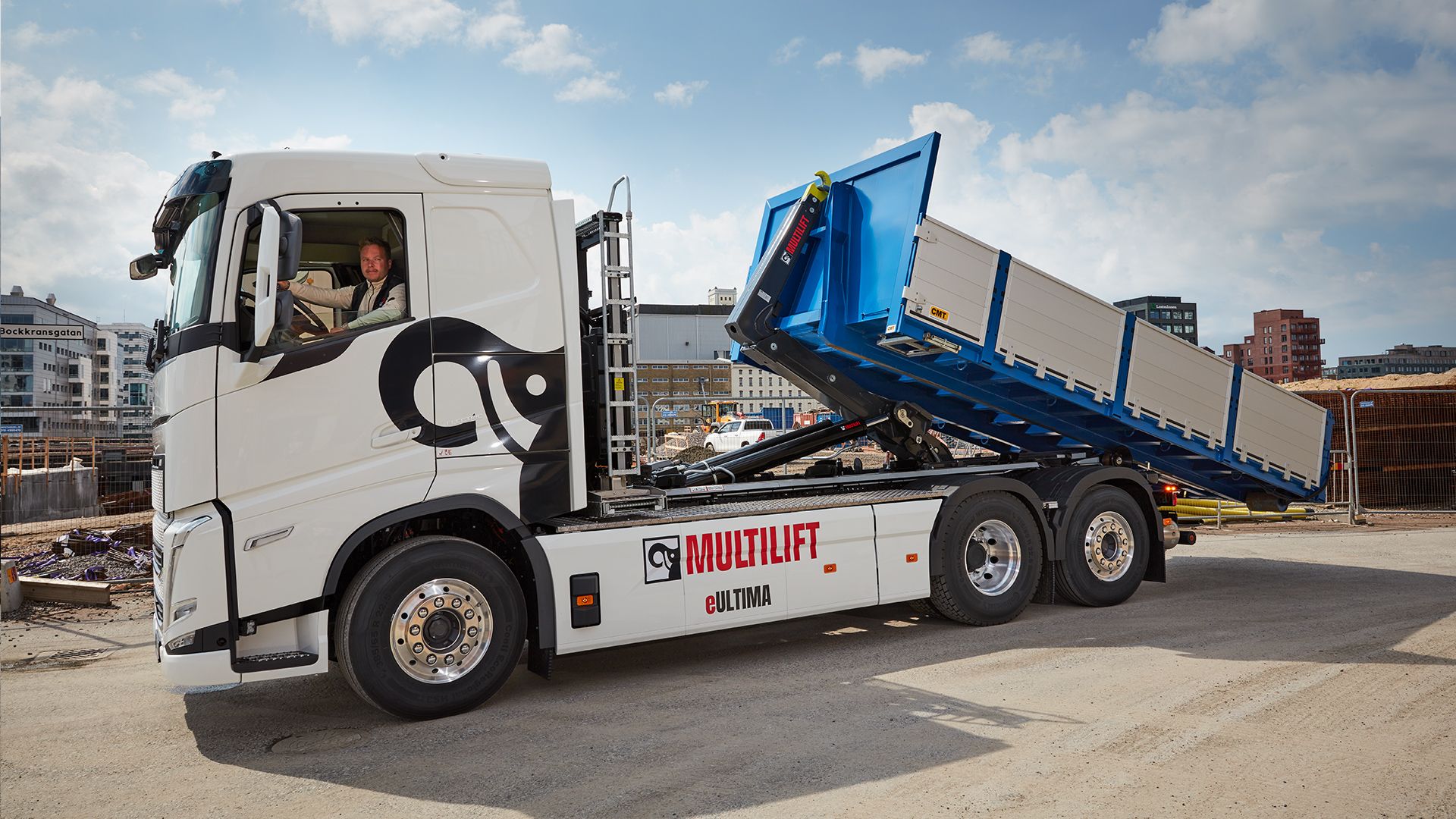
A hooklift truck is a heavy-duty vehicle fitted with a hydraulic system that uses an articulated hook to engage, lift, and mount a variety of interchangeable bodies or containers onto its chassis. This system allows a single operator to quickly load, unload, and even tip different modules like waste bins, flatbeds, or material containers, making it one of the most versatile and efficient load-handling solutions for UK industries.
In modern logistics and site management, efficiency is everything. Wasted time means lost revenue, and an underutilised vehicle is a drain on resources. The constant pressure to do more with less requires equipment that is not just powerful, but also adaptable. Relying on separate vehicles for separate tasks—a tipper for aggregate, a flatbed for equipment, a container vehicle for waste—is no longer a viable strategy for a competitive business.
This is where the operational intelligence of a hooklift truck comes into its own. It transforms a single truck chassis into a multi-talented workhorse capable of performing numerous jobs. By simply swapping the demountable body, your vehicle can shift from hauling construction debris in the morning to transporting recycling materials in the afternoon. It’s a pragmatic solution designed to maximise uptime and increase the earning potential of every vehicle in your fleet.
What Sets This Hooklift Apart?
The ingenuity of a hooklift truck lies in its straightforward, powerful mechanics. Unlike more cumbersome systems, its design is centered on speed, safety, and operator efficiency. It’s not just about lifting; it’s about a smarter, faster operational cycle managed from the safety of the cab.
Key Components of the System
Understanding the core components reveals why this system is so robust and reliable:
- The Hook: A robust, articulated hook that securely engages with the container's lifting bar.
- The Jib: The main hydraulic arm the hook is attached to. It extends and retracts to pull the body onto the truck.
- The Frame: The solid foundation of the system, mounted directly to the truck's chassis to handle immense forces.
- Hydraulic Cylinders: These are the muscles of the operation, providing the power for all lifting and positioning movements.
- Rear Body Locks: Once loaded, these hydraulic locks clamp the demountable body to the chassis, ensuring it's completely secure for transport.
The Operational Sequence: A Model of Efficiency
The entire process is engineered for a single operator to complete in minutes, minimising downtime and maximising productivity on site.
- Alignment: The driver reverses the hooklift truck towards the demountable body, aligning the hook with the container's A-frame bar.
- Engagement: From the cab, the operator extends the hydraulic jib until the hook securely latches onto the bar.
- The Pull: The powerful hydraulic system retracts the jib, pulling the container smoothly up a ramp and onto the truck’s frame in a single, controlled arc.
- Positioning & Locking: The body slides forward into its final transport position. The rear hydraulic locks then engage automatically to firmly secure it to the chassis, ready for the road.
- Dumping Capability: For tipping jobs, the system uses the main arm as a hinge, lifting the front of the body to dump materials precisely where needed.
From Tight Alleys to Tough Terrains: Real-World Applications
The true value of a hooklift truck is its ability to adapt. Its flexibility makes it a cornerstone asset across a huge range of demanding UK industries, from dense urban centres to rugged rural sites.
Waste Management and Recycling
This is the classic hooklift application, and for good reason. The system's speed is perfect for the fast-paced world of waste collection. A single hooklift truck can service dozens of large bins in a single shift, dropping a full container and picking up an empty one in minutes. This operational speed is critical for maximising route efficiency and profitability.
Construction and Demolition
On a busy construction site, delays are costly. A hooklift is the ideal tool for managing skips of aggregate, soil, or demolition debris. One truck can keep the entire site clear by constantly rotating containers, ensuring work is never held up waiting for a pickup. Its ability to place bodies precisely, even on uneven ground, is a major advantage.
Agriculture
For modern farms, a single vehicle that performs multiple roles is a huge cost-saver. A farmer can use a hooklift truck with different demountable bodies for different seasonal tasks—a flatbed for moving hay bales, a sealed container for transporting grain, or a tanker body for water—all with a single chassis. This reduces the need for several specialised, and often underused, vehicles.
Scrap Metal and Materials Handling
The demanding environment of a scrap yard requires equipment that is tough and reliable. The robust construction of a premium hooklift system, like a MULTILIFT, is built to handle the heavy, abrasive loads of scrap metal day in, day out. Its power and durability ensure consistent performance when it matters most.
The UK Advantage: Navigating Tight Streets and Tighter Budgets
Operating a commercial vehicle in the UK presents a unique set of challenges. From navigating historic city centres with tight access to meeting strict payload regulations and managing tight operational budgets, your equipment has to work harder and smarter. This is where a hooklift engineered specifically for UK conditions provides a clear competitive edge.
EvoLight™ Construction: Maximising Your Legal Payload
On UK roads, payload is profit. Every kilogram of unnecessary equipment weight is a kilogram less of material you can legally carry. Our MULTILIFT EvoLight™ construction tackles this head-on. By using advanced, high-tensile steels, we deliver market-leading strength at a significantly lower weight. This directly translates to a higher legal payload for your hooklift truck on every single run, maximising your earning potential and reducing your cost per tonne.
Precision in Confined Spaces
Delivering to a cramped building site or collecting a bin from a narrow London mews is a daily reality. The articulated jib of a MULTILIFT hooklift gives the operator superior control and precision. You can place or retrieve a container at an angle and with far greater accuracy than a straight-pull cable system. This means faster, safer operations in tight spots and less risk of damaging the container, the truck, or the customer's property.
Uncompromising Safety and In-Cab Control
Safety is not negotiable. A key advantage of the hooklift system is that the entire operation can be managed from the safety of the vehicle's cab. The operator isn't exposed to moving machinery, treacherous weather, or the manual handling risks associated with heavy cables. With advanced features like automatic body locking systems, you can be confident that every load is secure before you move, protecting your staff and your business.
HiConnect™ for Smarter Fleet Management
Unplanned downtime is a business killer. To manage tighter budgets effectively, you need to know your Total Cost of Ownership (TCO). With HiConnect™, your hooklift truck provides real-time data on usage, operational performance, and service needs. This allows you to move from reactive repairs to a predictive maintenance schedule, fixing issues before they become breakdowns. It keeps your fleet on the road earning, not in the workshop waiting.
Weighing Your Options: When Does a Hooklift Make Financial Sense?
A premium hooklift truck is a significant capital investment. The decision to add one to your fleet shouldn't be based on features alone, but on a solid financial case. It comes down to understanding the return on that investment, which is measured not by the initial price tag, but by its impact on your daily operational costs and revenue-earning potential.
Beyond the Purchase Price: Calculating Your Total Cost of Ownership (TCO)
Smart operators look at the complete financial picture. The true cost of any piece of equipment is its TCO, which includes the initial purchase plus all running costs over its service life. A cheaper system can often cost you more in the long run.
Key factors that define a hooklift's TCO include:
- Uptime and Reliability: A vehicle sitting in the workshop is a vehicle losing money. A robust, well-engineered hooklift means fewer breakdowns and more time on the road earning.
- Payload Efficiency: The ability to carry a higher legal payload on every trip, thanks to lightweight construction like EvoLight™, directly reduces your cost-per-tonne and increases revenue.
- Maintenance Costs: Proactive servicing, informed by data from systems like HiConnect™, prevents costly major failures. Quality components and construction also mean a longer, more predictable service life.
- Operator Efficiency: Faster cycle times mean your driver can complete more jobs per day. This isn't a small benefit; over a year, it adds up to a substantial increase in turnover from a single asset.
- Resale Value: Premium equipment from a respected brand like MULTILIFT holds its value far better than generic alternatives, giving you a greater return when it's time to upgrade your fleet.
The Key Question: Versatility vs. Specialisation
The core financial argument for a hooklift truck hinges on its versatility. Ask yourself: does your business perform a variety of tasks?
If the answer is yes, the ROI is clear. Investing in one hooklift truck that can function as a tipper, a skip loader, and a flatbed is far more cost-effective than purchasing, insuring, and maintaining three separate, specialised vehicles. It reduces fleet size, lowers overheads, and gives you the agility to take on different types of work as opportunities arise.
For an operation that only ever performs one highly repetitive task, a dedicated vehicle might seem sufficient. However, a hooklift still offers future-proofing, allowing your business to diversify without needing to invest in entirely new vehicles.