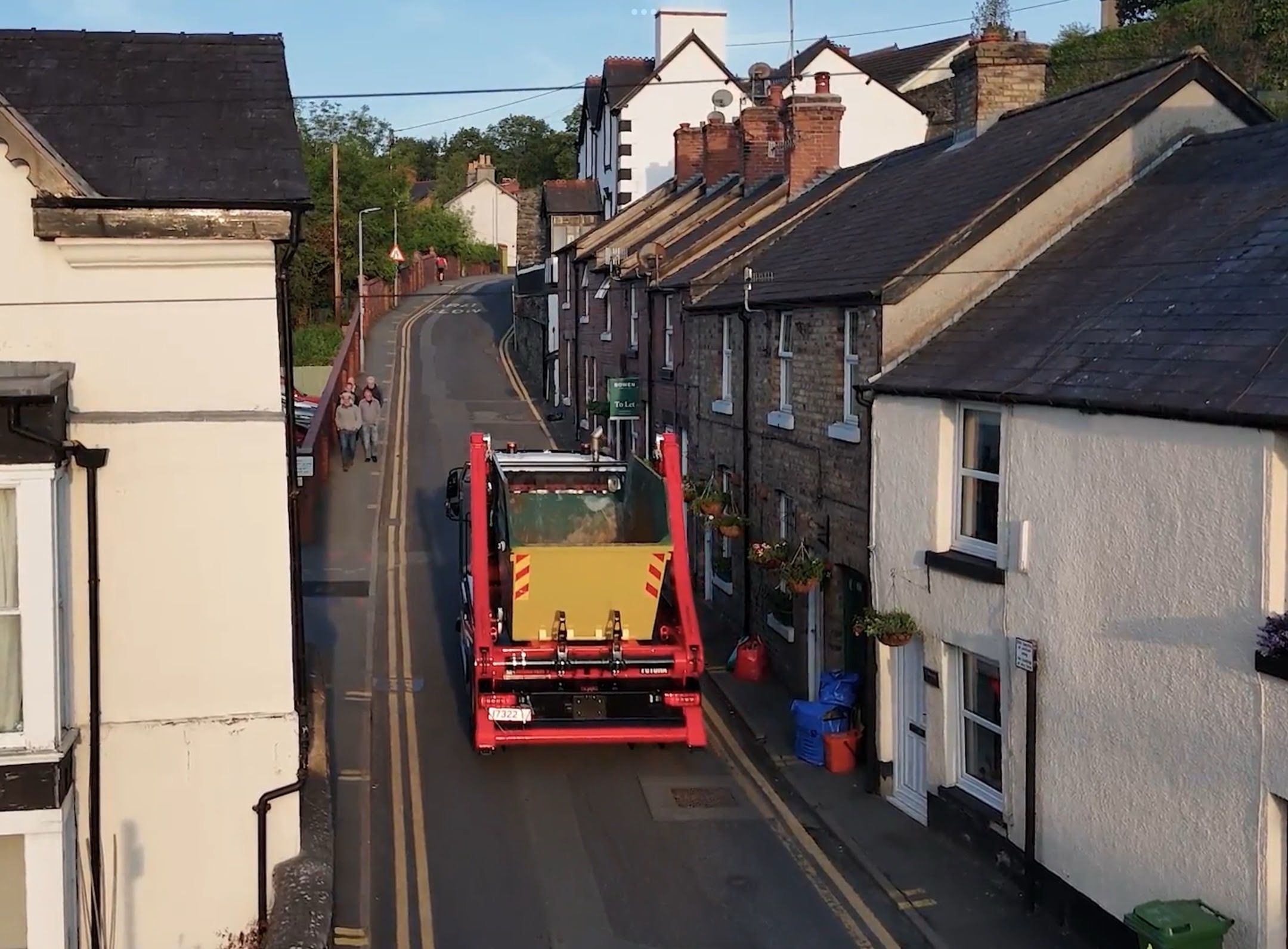
A skiploader is a specialised commercial vehicle fitted with hydraulic arms designed to lift, transport, and place open-top waste containers, commonly known as skips. It is an essential piece of equipment for the UK waste management, construction, and recycling industries, enabling the efficient handling of bulk materials from the point of collection to disposal.
Anyone operating in UK waste or construction knows the daily reality: tight residential streets, congested urban sites, and access points never designed for modern commercial vehicles. Getting a container precisely where your customer needs it, without causing delays or damage, is a constant operational challenge. This is where the skiploader proves its worth. It isn't just a lorry for carrying skips; it's a precision tool engineered for navigating these demanding environments. Understanding the mechanics of a skiploader, its key applications, and what defines a high-performance unit is fundamental to running an efficient and profitable operation.
More Than Just Quaint: The Real Problem with Britain's Narrow Roads
To tourists, our winding lanes and tight city streets are a charming feature of the British landscape. To a vehicle operator, they're a daily source of operational headaches and financial risk. This isn't about aesthetics; it's about the practical, costly impact on your business.
The Daily Grind: Manoeuvring and Wasted Time
Every minute spent on a multi-point turn in a narrow cul-de-sac is a minute lost from your schedule. This wasted time quickly adds up across a fleet, leading to fewer jobs completed per day and increased fuel consumption. A failed delivery due to poor access isn't just an inconvenience; it's a direct hit to your bottom line and can strain client relationships.
Risk, Damage, and Reputation
Navigating tight spaces dramatically increases the risk of accidents. Scraped gate posts, damaged walls, or clipped wing mirrors are more than just repair bills. They represent a potential insurance claim and, more importantly, damage to your professional reputation. Customers need to trust that your team can operate safely and respectfully on their property.
The Access Challenge: Winning or Losing the Job
In many urban and residential settings, the job comes down to one simple question: can your vehicle get in and out? For construction sites tucked behind terraced houses or renovation projects in historic town centres, having equipment that is compact and manoeuvrable isn't a bonus—it's a prerequisite. If your skiploader can't access the site, the work goes to a competitor who can.
The Skiploader: Small Footprint, Big Impact
This is precisely the environment the skiploader is engineered to conquer. Unlike larger, more cumbersome vehicles, its design prioritises agility and precise control, turning a potential access nightmare into a routine operation.
Designed for Precision Placement
The magic is in the hydraulic arms. A skiploader doesn't just pull a container; it lifts it. This provides a crucial advantage, allowing an operator to carefully lift a skip over a garden wall, a fence, or other low-level obstacles. You can position the container exactly where it's needed in a driveway or on a tight site, minimising disruption and manual handling for your client.
The Compact Chassis Advantage
Skiploaders are typically mounted on rigid chassis, often around the 18-tonne Gross Vehicle Weight (GVW) mark. This configuration gives them a much smaller turning circle and a more compact footprint compared to larger hookloaders or articulated vehicles. This inherent manoeuvrability is what allows a skilled driver to navigate narrow estate roads and reverse into tight gateways that would be impossible for bigger lorries.
Enhanced Visibility and Control for Safer Operation
When every inch counts, the operator's view is critical. Modern skiploaders equipped with radio remote controls give the operator the freedom to move around the vehicle. They can stand at the rear, watch the clearance on both sides, and guide the skip into place with complete confidence. This direct line of sight drastically reduces the risk of accidental damage and makes the entire process safer and more efficient.
Bigger Isn't Always Better: Why Skiploaders Beat Larger Lorries
In the world of logistics, it's easy to assume that a bigger truck means more efficiency. But when it comes to the specific challenges of UK waste collection and construction site servicing, that logic is often flawed. A large hookloader is a powerful tool for bulk haulage, but it's the wrong tool for the job when access is tight and precision is paramount. Here’s where the skiploader consistently outperforms its larger counterparts.
Access is Everything
This is the most critical distinction. A hookloader requires a long, straight approach to roll its container on and off. A skiploader can reverse into a driveway and lift its container over an obstacle, placing it neatly in a space the hookloader couldn't even approach. This capability single-handedly opens up a huge segment of the market—from residential clear-outs to small-scale urban construction—that is simply inaccessible to larger vehicles.
Reduced Site Impact
Customers care about their property. A heavy, multi-axle vehicle can easily crack driveways, scuff block paving, or rut lawns. The relatively lighter weight and smaller footprint of a standard 18-tonne skiploader minimises this risk. It shows respect for the customer's site, reduces the chance of costly damage claims, and helps build a reputation for professional, careful service.
Greater Operational Versatility
The business model for many skip hire firms is built on volume and fast turnaround. A skiploader is perfectly suited for this rhythm, able to complete numerous drop-offs and collections in a single day across a dense urban or suburban area. While a hookloader is ideal for moving large volumes from a single point (like a major demolition site), the skiploader offers the flexibility needed for the varied, fast-paced world of general skip hire.
From Urban Renovations to Rural Clear-outs: The Versatile Skiploader
The challenges of British roads aren't confined to city centres. From tight London mews to winding country lanes in the Highlands, the need for precise, careful vehicle manoeuvring is a constant. The true strength of the skiploader lies in its adaptability, making it the go-to solution for an incredibly wide range of UK jobs.
Urban Operations: The Key to City Contracts
Think of a shop refit on a busy high street, a small demolition job behind a row of terraces, or a basement excavation in a conservation area. These are high-value jobs where access is the primary constraint. The skiploader excels here. Its ability to lift a skip over a wall and place it neatly within a site hoarding, all while taking up minimal road space, is invaluable. This capability doesn't just make the job easier; it makes it possible, allowing you to service clients that competitors with larger vehicles simply can't reach.
Residential and Rural Jobs: Where Care is Crucial
When you're working on private property, your clients' biggest fear is damage. A large lorry can easily crack a driveway or tear up a lawn, turning a simple skip delivery into a costly dispute. The lighter footprint and precision control of a skiploader are huge advantages. You can place a skip carefully on a driveway without scraping gate posts or disturbing garden borders. This demonstrates a level of professionalism and care that wins trust and secures repeat business, whether for a home extension, garden landscaping project, or a farmyard clearance.
The skiploader proves its worth in countless scenarios:
- Tight urban construction sites where space is at a premium.
- Residential driveway drop-offs for home renovations and clear-outs.
- Landscaping projects with restricted access to rear gardens.
- Shop and office refits in busy town centres with heavy pedestrian traffic.
- Rural property clearances accessed via narrow, single-track lanes.