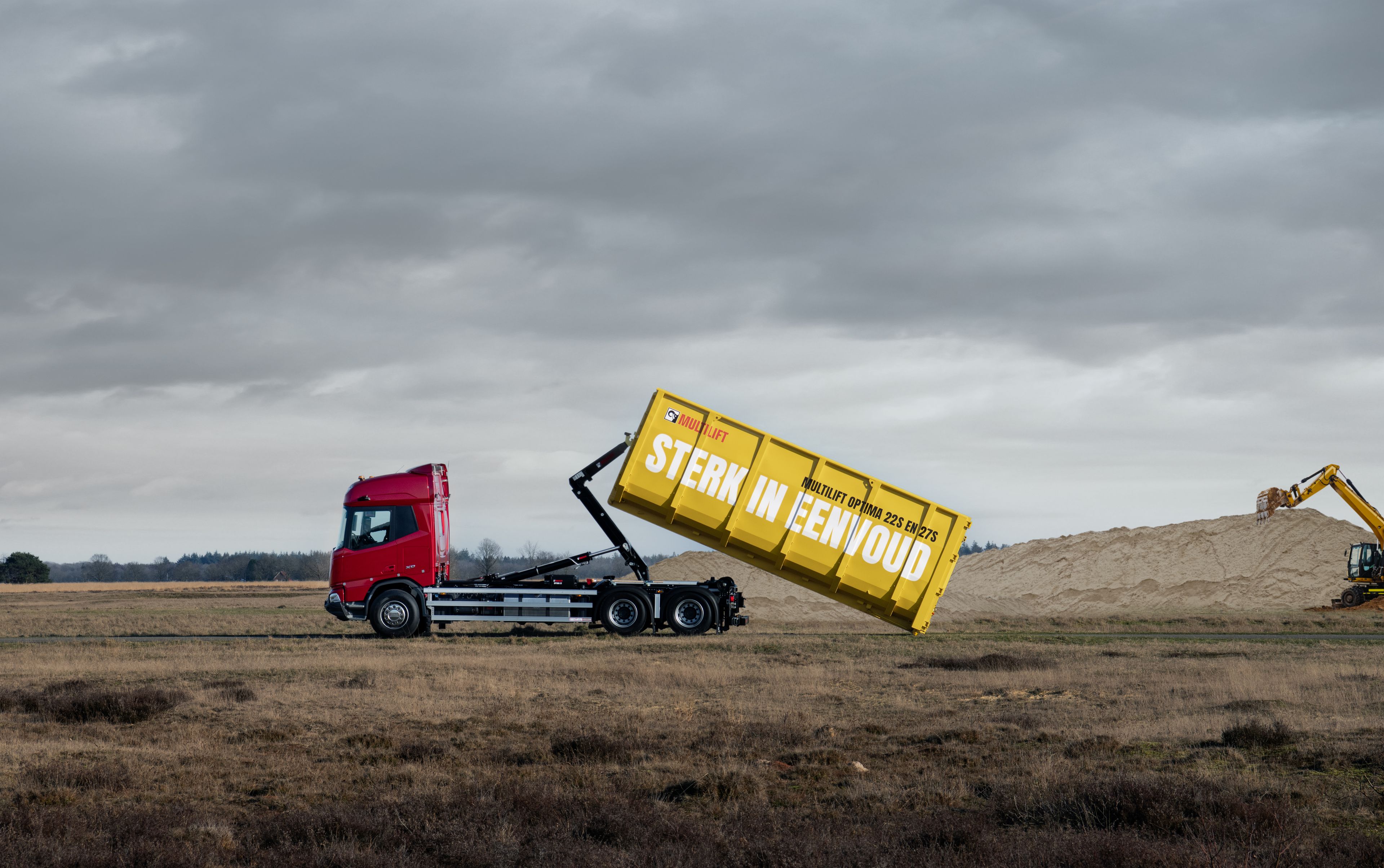
A modern hooklift cuts total lifecycle costs by delivering faster cycle times, greater payload capacity, and enhanced operational safety. By engineering systems with high-tensile, lightweight steel and intuitive controls, a single truck can perform more tasks per day, maximising revenue while reducing fuel consumption and minimising the risk of costly downtime or accidents.
In the world of on-road load handling, efficiency isn't a luxury—it's the difference between profit and loss. Every moment a truck spends idle in the yard, every kilogram of payload you can't legally carry, and every minute wasted on a slow loading cycle directly impacts your bottom line. The constant pressure from tight margins, strict UK road regulations, and demanding client schedules means your equipment has to work harder and smarter.
This is where the choice of hooklift becomes a critical business decision, not just an operational one. While the basic principle of a hook and arm system is straightforward, the performance gap between a standard unit and a modern, purpose-built hooklift is substantial. It's about more than just lifting; it's about cycle speed, vehicle utilisation, operator safety, and ultimately, the total cost of ownership over the vehicle's entire lifespan. Investing in the right equipment transforms a vehicle from a simple cost centre into a powerful profit-generating asset for your fleet.
Beyond the Sticker Price: Understanding Total Hooklift Ownership Costs
The initial purchase price of a hooklift is just one part of a much larger financial picture. A savvy fleet manager looks at the Total Cost of Ownership (TCO), which accounts for every expense throughout the equipment's working life. A cheaper unit can often become the most expensive one when you factor in fuel, maintenance, and lost revenue from lower payload and slower operation.
1. Unladen Weight and Payload Capacity
This is perhaps the most critical factor for profitability. Every kilogram saved on the hooklift's own weight is a kilogram you can add to your payload, legally. Our MULTILIFT EvoLight construction uses high-tensile steel to be both strong and light. This lower unladen weight directly translates to a higher legal payload on every single run, which means more revenue and fewer journeys to complete the same amount of work.
2. Fuel Consumption
A hooklift's hydraulics are powered by the truck's engine. Faster cycle times mean less time with the engine running at high revs, which cuts down on fuel use. Furthermore, a lighter overall vehicle weight reduces fuel consumption on the road. These savings might seem small on a per-trip basis, but they accumulate into a significant reduction in operational costs over a year.
3. Maintenance and Uptime
Downtime is a profit killer. A hooklift built with superior components and robust engineering will spend more time on the road earning money and less time in the workshop. It's the difference between planned maintenance and costly, unexpected breakdowns. A service plan like ProCare can fix your maintenance costs and offer guaranteed uptime, providing financial predictability and peace of mind.
4. Operator Efficiency and Safety
An intuitive, smooth, and fast control system allows the operator to work with confidence and speed. This reduces cycle times and the risk of operational errors. Crucially, systems that allow the driver to perform the entire operation from the safety of the cab significantly reduce the risk of slips, trips, and falls—protecting your most valuable asset and avoiding the immense direct and indirect costs of a workplace accident.
Smarter, Stronger, Faster: The Modern Features That Make a Difference
The best hooklift isn't just about raw lifting power. It’s about intelligent design and integrated technology that work together to make your operation more profitable. The engineering advancements in today's premium systems are focused on tangible, real-world outcomes: speed, safety, and payload.
Advanced Control Systems
Forget clunky, slow hydraulics. Modern control systems are the brain of the hooklift, designed for maximum efficiency. Features like automatic sequence control allow the operator to initiate a full loading or unloading cycle with a single lever movement. The system optimises the speed and movement of the arm, ensuring a fast, smooth, and safe operation every time. This not only cuts cycle times but also reduces wear and tear on the equipment and chassis.
High-Tensile Steel and EvoLight Construction
The materials used in construction are a core differentiator. By using advanced, high-tensile steel, a modern hooklift can be built significantly lighter without sacrificing strength or durability. This EvoLight approach is fundamental to maximising your vehicle's earning potential. The weight saved is converted directly into increased payload capacity, meaning you can legally haul more per trip, improving fuel efficiency and reducing the number of journeys required.
Integrated Safety Features
Safety is not an optional extra; it's essential for protecting your team and your business. Modern hooklifts go beyond basic safety with integrated systems that prevent common operational errors. This includes things like sensors that confirm the body is correctly seated before the locks engage and interlocks that prevent the hook arm from being operated at unsafe speeds or when the vehicle is unstable. These features are vital for compliance and for preventing accidents that lead to costly downtime and insurance claims.
Connectivity and Performance Data
A truly smart hooklift gives you the data you need to manage your fleet effectively. Systems like HiConnect provide real-time information on equipment usage, service alerts, and operator performance. This allows you to move from reactive repairs to a predictive maintenance schedule, addressing issues before they cause a breakdown. This data-driven approach is key to maximising uptime and controlling your lifecycle costs.
How Advanced Engineering Slashes Maintenance and Downtime
In a high-pressure logistics operation, an idle truck is more than just an inconvenience; it's a direct drain on your revenue. The primary goal of advanced hooklift engineering is simple: keep your vehicle on the road, earning money. This is achieved by focusing on robust design, minimising wear and tear, and using intelligent technology to stay one step ahead of potential failures.
Built for the Demands of UK Work
Your equipment has to stand up to everything from corrosive road salt in winter to the abrasive materials found on demolition sites. A premium hooklift is built with this reality in mind. This means using superior materials, certified welding techniques, and durable paint finishes that resist rust and damage. High-quality hydraulic hoses and seals are less likely to perish or fail, preventing the leaks that can lead to sudden breakdowns and environmental issues. This robust build quality is the first line of defence against unscheduled downtime.
Minimising Stress with Smooth Operation
Every time a hooklift operates, it puts stress on its own components and the vehicle's chassis. Older or basic systems can be rough, sending jarring shocks through the equipment with every movement. A modern control system, however, ensures every action is smooth and controlled. This significantly reduces the long-term stress and fatigue on pins, bushes, and structural parts. The result is a longer operational lifespan and fewer wear-related repairs for both the hooklift and the truck itself.
Moving from Reactive to Predictive Maintenance
The biggest enemy of profitability is the unexpected breakdown. This is where connectivity transforms maintenance. A system like HiConnect constantly monitors your hooklift's performance, tracking usage data and flagging potential issues before they escalate into serious problems. Instead of a hydraulic pump failing mid-job, HiConnect can alert you to a performance drop, allowing you to schedule a replacement during planned downtime. This shifts your maintenance strategy from reactive and expensive to predictive and controlled.
Fix Your Costs and Guarantee Uptime with ProCare
For ultimate financial predictability, a ProCare service plan is the solution. It turns unpredictable maintenance bills into a fixed, budgeted operational cost. You know exactly what you'll be spending, with no nasty surprises. More importantly, it guarantees that your equipment is maintained by certified technicians using genuine parts, ensuring it performs to its original specification. This is an investment in reliability, designed to maximise your vehicle's uptime and protect its long-term value.
Turning Efficiency into Earnings: How a Better Hooklift Expands Your Profit Margins
The decision to invest in a modern hooklift is a direct investment in your business's profitability. The advanced features and robust engineering discussed are not just technical specifications; they are powerful tools for expanding your profit margins. When you connect these efficiencies to your daily operations, the financial benefits become crystal clear.
More Jobs Per Day, More Revenue Per Truck
Time is your most valuable, non-renewable resource. A hooklift with faster cycle times allows your driver to complete more collections and deliveries in a single shift. Shaving minutes off every single operation quickly adds up, potentially allowing for one or two extra jobs per day. This doesn't just increase revenue; it boosts the overall utilisation of your most expensive assets—your truck and your driver. Your fleet works more intensely and earns more money in the same amount of time.
Maximising Payload on Every Journey
Profit per job is heavily influenced by how much you can haul in one go. A lighter hooklift system, like one with EvoLight construction, allows you to maximise your legal payload. This means you can transport more material per trip, directly reducing the cost-per-tonne. Fewer journeys are needed to complete a large contract, which slashes your expenditure on fuel, tyres, and driver hours. It's a straightforward equation: carrying more for the same cost fundamentally increases the profitability of every task.
Building a Reputation That Wins Contracts
In a competitive market, reliability is your reputation. Clients want partners who turn up on time and get the work done safely and efficiently. A fleet equipped with reliable, modern hooklifts suffers from less downtime and fewer on-site issues. This consistency builds trust and helps you secure and retain the best, most profitable contracts. Furthermore, a proven commitment to operator safety doesn't just protect your team; it's a mark of professionalism that discerning clients look for when choosing a supplier.
Ultimately, the best hooklift is the one that actively contributes to your bottom line. By reducing your total cost of ownership and simultaneously increasing your capacity to earn, the right equipment becomes a key driver of your business's success.